A few months ago, a Center City homeowner called us because her door kept stopping halfway and then reversing. Our technicians found worn rollers, loose hinge bolts, and a torsion spring that was nearly at the end of its life. One focused visit returned the door to smooth, quiet operation and prevented a sudden failure. Moments like this are a reminder that garage door repair is not something to put off until the door will not move. Small issues grow quietly, and regular tune-ups catch them before they become costly or unsafe.
You might be surprised to learn that most residential garage doors cycle thousands of times per year. Every open and closed place stresses springs, cables, rollers, tracks, and the opener. In Philadelphia, the shift from icy winters to humid summers adds even more wear. That is why a schedule for inspections, lubrication, balance checks, and safety tests is not just helpful; it is essential.
Whether you own a single-car garage in South Philly or manage multiple commercial doors in the Northeast industrial corridor, the same rule applies. Routine maintenance keeps people safe, protects vehicles and property, avoids breakdowns, and extends the life of your system. This guide explains how often to service your door, what a full tune-up includes, and the practical steps you can take at home between professional visits.
How a Modern Garage Door Works (In Plain Language)
A garage door is a balanced machine. The door panels ride on rollers that glide inside metal tracks. Cables connect to drums above the door and wrap as the door opens. Springs supply the counterbalance that makes a heavy door feel light. The opener does not lift all the weight by itself. It is a controller that guides a balanced door through its travel.
- Springs carry the load. Torsion springs sit above the door and twist to store energy. Extension springs run alongside the horizontal tracks and stretch to assist in opening.
- Cables and drums transfer the spring’s force to the door. Frayed cables are serious safety hazards.
- Rollers, hinges, and tracks keep the door aligned. Dust and bent track sections create noise and binding.
- The opener provides controlled motion and safety features like photo-eyes and force limits. Chain, belt, and direct-drive systems each have unique maintenance needs.
When any part falls out of tune, the rest of the system must work harder. That is when you hear grinding, feel shuddering, or notice the door reversing.
Why Regular Maintenance Matters More Than You Think
- Safety. A door that is out of balance can come down too quickly. A cable that snaps can cause damage. Safety sensors that are misaligned can fail to protect people and pets. Routine checks keep these risks in control.
- Longevity. Lubrication and adjustment reduce friction and strain. Springs last longer when the door balance is correct. Openers run cooler and last more years when they are not dragging an unbalanced door.
- Quiet operation. A tuned door glides with a low, even sound. Screeching, rattling, or clanging is a signal that hardware needs attention.
- Lower total cost. Replacing one cracked roller is much cheaper than replacing a bent track and a burned-out opener motor. Preventive service pays for itself by preventing secondary damage.
How Often Should You Schedule Service?
Think about service in terms of how many times the door cycles, local weather, and how essential the door is to your daily routine.
Residential homes in the Philadelphia area
- Annual professional tune-up for typical use of two to four cycles per day.
- Every six months if you use the door heavily, if you park multiple vehicles inside, or if a family member has mobility needs that require reliable operation.
- After major weather like prolonged freezing, heavy snow, or windstorms, which can knock tracks out of alignment or stress springs and seals.
Commercial and multifamily properties
- Quarterly tune-ups are a smart baseline for loading docks, parking facilities, and condo garages.
- Monthly visual inspections by onsite staff to spot loose hardware, damaged panels, or sensor issues between professional visits.
- Immediate service after any impact, obstruction event, or repeated nuisance trips of safety features.
A quick rule you can remember
If you cannot recall your last professional tune-up, it is time. If anything looks, sounds, or feels different, move your next service sooner.
Clear Signs You Need Garage Door Repair Now
- The door starts down and then reverses or hesitates.
- You see daylight around the sides or bottom, or the door rubs on one side.
- You hear scraping, banging, or popping as the door moves.
- The opener strains, hums, or the chain or belt slaps.
- The door is too heavy to lift by hand, or it falls when you let go at mid-travel.
- Cables appear frayed, rusty, or uneven on the drums.
- Safety eyes are blinking and will not reset after you clean and align them.
If any of these occur, stop using the door and schedule repair services with trained technicians. High-tension springs and cables are not DIY items.
What a Professional Tune-Up Includes (Our Step-by-Step Process)
At Moruzzi Garage Door Center, a thorough tune-up and safety check typically includes:
- Interview and test drive. We listen to your concerns, then run the door several times to observe symptoms.
- Full visual inspection. Panels, hinges, brackets, drums, cables, tracks, fasteners, and mounting points. We note wear, corrosion, and alignment.
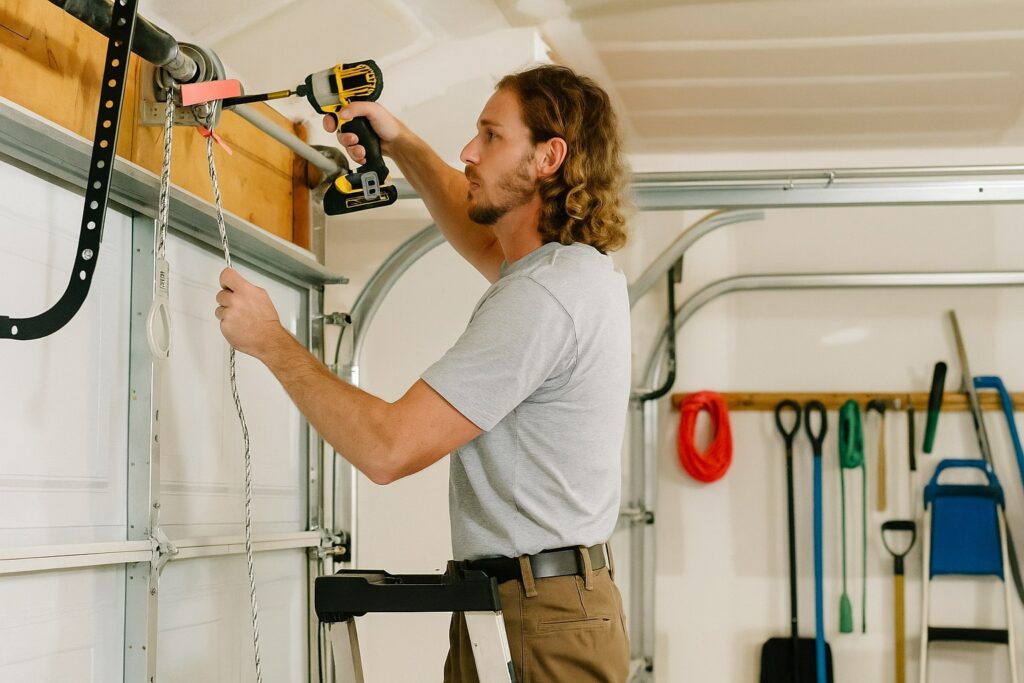
- Hardware torqueing. We tighten hinge bolts, track fasteners, bearing plates, and opener hardware to correct specifications for stable operation.
- Track alignment. We confirm plumb, level, and proper spacing so rollers move freely without dragging.
- Roller check. We check stems, bearings, and wheel surfaces. We replace cracked, flattened, or seized rollers.
- Spring balance and health. We unplug the opener, lift the door manually, and balance-test. We adjust torsion or extension springs for neutral balance and note spring age and cycle rating.
- Cable condition and drum wrap. We verify even wraps, correct tension, and no fraying or bird-nesting.
- Lubrication. We apply the correct lubricant on hinges, rollers, spring coils, and bearings. We do not grease tracks because that attracts grit.
- Opener service. Chain or belt tension, rail alignment, travel limits, force settings, and backup battery test if equipped.
- Safety systems. We clean and align photo-eyes, test auto-reverse with a 2×4 block, and verify manual release operation.
- Weather seals and threshold. We inspect the bottom seal, side seals, and header seal for gaps that admit water, pests, or cold air.
- Final multi-cycle test. We verify smooth, quiet operation and consistent safety responses.
- Report and recommendations. You receive a clear list of findings: what we fixed, what to monitor, and any parts approaching end of life.
This is a precision service designed to return your door to factory-like operation and comfort.
Springs: The Most Important Wear Item on Your Door
Torsion springs carry most of the workload. They have a cycle rating, often 10,000 cycles on basic sets and much higher for upgraded sets. A household using four cycles per day will reach 10,000 cycles in about seven years. Heavy use reaches that mark faster. When springs age, they weaken, and the door feels heavy. If a spring breaks, do not try to force the door. Call a professional.
Pro tips about springs:
- When one torsion spring breaks on a two-spring system, we recommend replacing both so they age evenly.
- Upgrading to higher-cycle springs is cost-effective for busy households and commercial doors.
- Never adjust a spring without the correct tools and training.
Opener Systems: Chains, Belts, and Smart Controls
Your garage door opener is the traffic manager. When the door is balanced, the opener moves it with little effort.
- Chain-drive systems are durable and strong. They can be a little louder, which is fine for detached garages.
- Belt-drive systems run quietly and are great under bedrooms or near living areas.
- Direct-drive or wall-mount systems free up ceiling space and reduce vibration on the door.
Maintenance tips:
- Keep chain tension within the manufacturer’s spec. Too tight stresses the motor; too loose causes slapping.
- Replace worn trolley bushings, sprockets, or rail supports that allow excess play.
- Clean and wipe the photo-eyes. A soft cloth and gentle motion is enough.
- Test the backup battery twice per year if your opener has one.
Weather in Philadelphia: What It Does to Doors and How to Adapt
- Winter freeze. Cold contracts metal and thickens lubricants. Dry lube on rollers and hinges helps. Keep the bottom seal soft with routine replacement every few years.
- Spring rain. Water finds gaps. Inspect side seals and the threshold to prevent puddles and rust on the bottom section.
- Summer humidity. Wood doors can swell. Steel doors can sweat and invite surface rust. Ventilate the garage and keep seals in good condition.
- Autumn debris. Leaves and dust collect in tracks and on photo-eyes. Keep these areas clean.
A twice-yearly tune-up in spring and fall aligns with these transitions and keeps your door ready for the next season.
A Simple Home Care Routine Between Professional Visits
Use this monthly checklist. It takes fifteen minutes and prevents surprises.
- Look and listen. Run through the door. It should move evenly with a steady sound.
- Wipe the tracks. Remove grit with a dry cloth. Do not oil the track itself.
- Check the seals. Close the door at dusk. If you see light at the sides or bottom, seals need attention.
- Test balance. With the opener disengaged, lift the door halfway and let go carefully. A balanced door stays in place.
- Clean photo-eyes. Gently wipe the lenses and confirm both indicator lights are solid.
- Test safety reverse. Place a 2×4 on the floor under the door. The door should reverse immediately when it touches the block.
- Replace remote batteries annually or when response is inconsistent.
If anything seems off, schedule a professional door service appointment.
Common Repairs We Perform (And What They Mean)
- Broken spring replacement. Restores balance and brings the door back to safe operation.
- Cable replacement. Prevents sudden drops and uneven lifting.
- Roller upgrades. Nylon rollers reduce noise and rolling resistance.
- Hinge and hardware replacement. Tight, healthy hinges keep panels aligned and prevent binding.
- Track repair or replacement. Corrects dents and bends from minor impacts.
- Opener repairs. New logic boards, limit switches, sprockets, or belt kits extend opener life.
- Panel repair or replacement. Fixes dents and water damage without a full new door.
- Seal and threshold installation. Improves comfort, keeps out pests, and protects the floor.
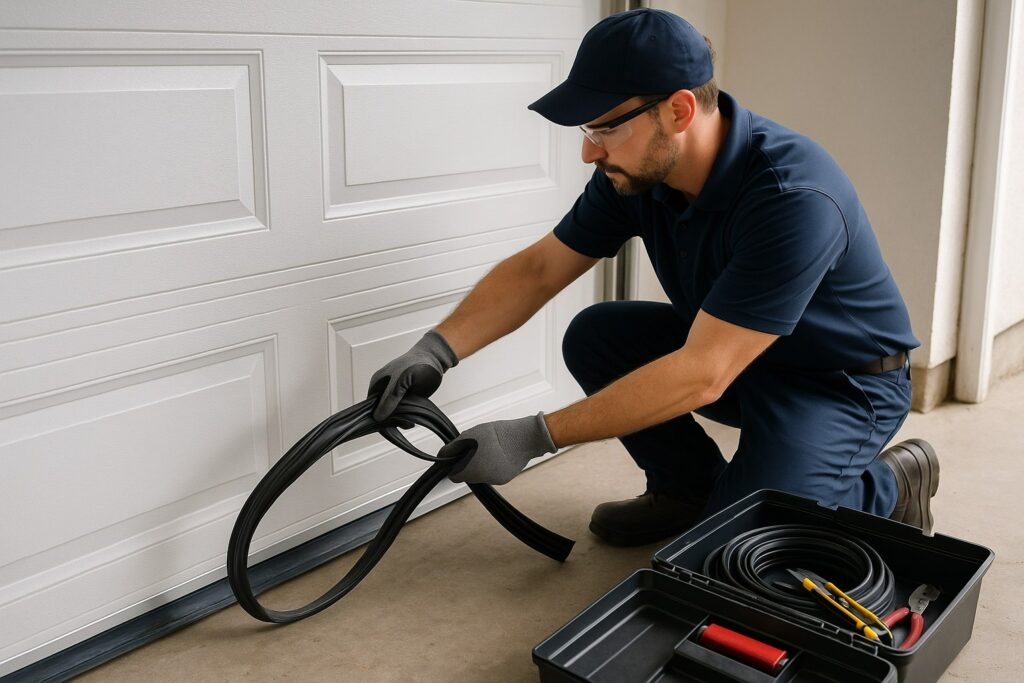
Each repair is sized to your needs and budget so you pay only for the work that solves the problem.
How Much Does Maintenance or Repair Cost?
Every job is unique, but here is a helpful way to think about value:
- Preventive tune-up: modest cost, big benefit in life extension and quiet operation.
- Minor part replacements: rollers, hinges, or seals are affordable and prevent larger wear.
- Major wear items: springs and cables are higher-value components but still cost-effective compared with emergency failures.
- Opener repair vs. replacement: if your opener lacks modern safety features or has repeated faults, replacement often makes the most sense.
We provide clear estimates and explain each line so you can choose with confidence.
Warranty, Safety Codes, and Insurance Considerations
- Warranties often require regular maintenance to remain valid. Keep basic records of service dates.
- Safety compliance protects families, visitors, and employees. Photo-eyes, force settings, and proper signage at commercial doors reduce risk.
- Insurance may ask for proof of maintenance after an incident. A simple service log helps your claim.
Residential vs. Commercial: Different Environments, Different Schedules
Residential: Lower daily cycles but a strong need for quiet operation, smooth travel, and reliable access. Annual service is usually enough, with spring and fall preferred.
Commercial: Higher cycles, more dust and impact risk, more complex controls like keypads, loop detectors, and gates. Plan quarterly tune-ups, plus quick response repair for any incident.
We also service gates and access systems. If your property has a swing gate or slide gate, include it in your maintenance plan so the whole entrance system works together.
Practical Service Timeline You Can Save
- Monthly at home: quick visual and safety tests.
- Every 3 months: re-wipe tracks, re-check seals and photo-eyes, confirm remote battery health.
- Every 6 months: if high use, schedule a professional tune-up.
- Annually, all homes and small businesses book a full professional tune-up.
- Immediately: after severe weather, unusual noise, impact, or reversing problems.
Choosing the Right Partner: What to Expect From a Quality Garage Door Company
A dependable garage door company should offer:
- Clear communication. Straightforward estimates, timelines, and answers to your questions.
- Skilled technicians. Ongoing training, safe procedures, and the right tools.
- Quality parts. Reputable brands and parts that match your door’s weight and size.
- On-time appointments. Respect for your time and schedule.
- Follow-through. A report of the work, what was adjusted, and what to monitor over the next few years.
We bring these standards to every job, whether it is a simple door repair, a complex garage door opener replacement, or a full new garage door installation for your home or business.
Quick Self-Check You Can Do Today
- Stand inside with the door closed. Do you see light at any edge?
- Open the door fully. Is the travel smooth, or does it jitter?
- Close the door. Does it touch the floor evenly from left to right?
- Listen. Is the sound even and low, or clunky and sharp?
- Test the safety reverse with a small block as described earlier.
If you answer yes to any concern, schedule an appointment for an inspection and tune-up.
Frequently Asked Questions (FAQs)
1. What happens if I skip garage door maintenance for several years?
Skipping regular tune-ups can cause parts like springs, rollers, and cables to wear unevenly. This can lead to sudden breakdowns, higher repair costs, and even safety hazards due to increased tension or imbalance in the system.
2. Can I lubricate my garage door parts with household oils like WD-40?
Household oils are not ideal for garage doors. Professionals recommend using a silicone- or lithium-based lubricant because it resists dirt buildup, protects metal surfaces, and ensures smooth, long-lasting operation.
3. How can I tell if my garage door opener is too old and needs replacement?
If your opener is over 10–15 years old, lacks modern safety sensors, or frequently struggles to lift the door, it’s time to consider an upgrade. New openers offer quieter operation, energy efficiency, and smart-home integration for convenience and security.
4. Should I insulate my garage door during winter?
Yes, insulating your garage door helps regulate temperature, reduces energy loss, and prevents strain on the opener caused by cold-weather stiffness. It’s especially beneficial for attached garages or those used as workspaces in Philadelphia’s cold months.
The Takeaway
- Plan annual professional services for most homes in Philadelphia.
- Move to every six months if your door is a high-use entrance.
- Commercial sites benefit from quarterly tune-ups and monthly visual checks.
- Do the simple home routine monthly to keep things clean and safe.
- Call a professional for springs, cables, and any heavy or uneven movement.
A smooth, safe, quiet door is not luck. It is the result of regular care, the right adjustments, and fast attention when something changes.
How Can Moruzzi Garage Door Center Help You?
Moruzzi Garage Door Center is your local partner for garage door repair, maintenance services, and installation services across Philadelphia. Our expert team of skilled technicians handles everything from broken garage door springs and misaligned tracks to modern garage door openers and full new garage doors. We work with leading brands, match the correct parts to your door, and deliver the kind of precise door maintenance that keeps your system reliable through every season.
- 📍 Address: 1300 Market St, Philadelphia, PA 19107
- 📞 Phone: (267) 732-0907
- 🌐: moruzzigaragedoorcenter.com/contact-us/
Call today to schedule your tune-up or repair visit. Our team will restore smooth operation, protect your home or business, and answer any questions you have about keeping your door in top condition.
- How Often Should You Schedule Garage Door Repair or Tune-Ups?
- Automatic Garage Doors Maintenance Tips for Philadelphia, PA Homeowners
- Garage Door Opener Repair in Philadelphia, PA: Expert Tips and Services
- Garage Door Tune-Up Tips for Philadelphia, PA Homeowners
- Garage Door Maintenance in Philadelphia, PA: Expert Services for Your Home